The answer given prior is a perfectly valid explanation, but here is another: We must consider our knowledge of transformations: Using a trigonometric identity, sin 2 x + cos 2 x = 1.
Substitute x = 2π here, sin 2 2π + cos 2 2π = 1. We know that sin 2π = 0. Substitute it here, 0 2 + cos 2 2π = 1.
Cos 2 2π = 1. Cos 2π = ± 1. But 2π is in first or fourth quadrant and in each of the cases, cos is positive.
Thus, cos 2π = 1. Cos 2π = 1. Prove: x d − 1 ∣ x n − 1.
Use the intermediate value theorem to show that the equation, t a n ( x) = 2. Has an infinite amount of real solutions. So far i have used the ivt to show that for f ( x) = t a n ( x) in the interval ( − π 2, π 2) there is a l between − ∞.
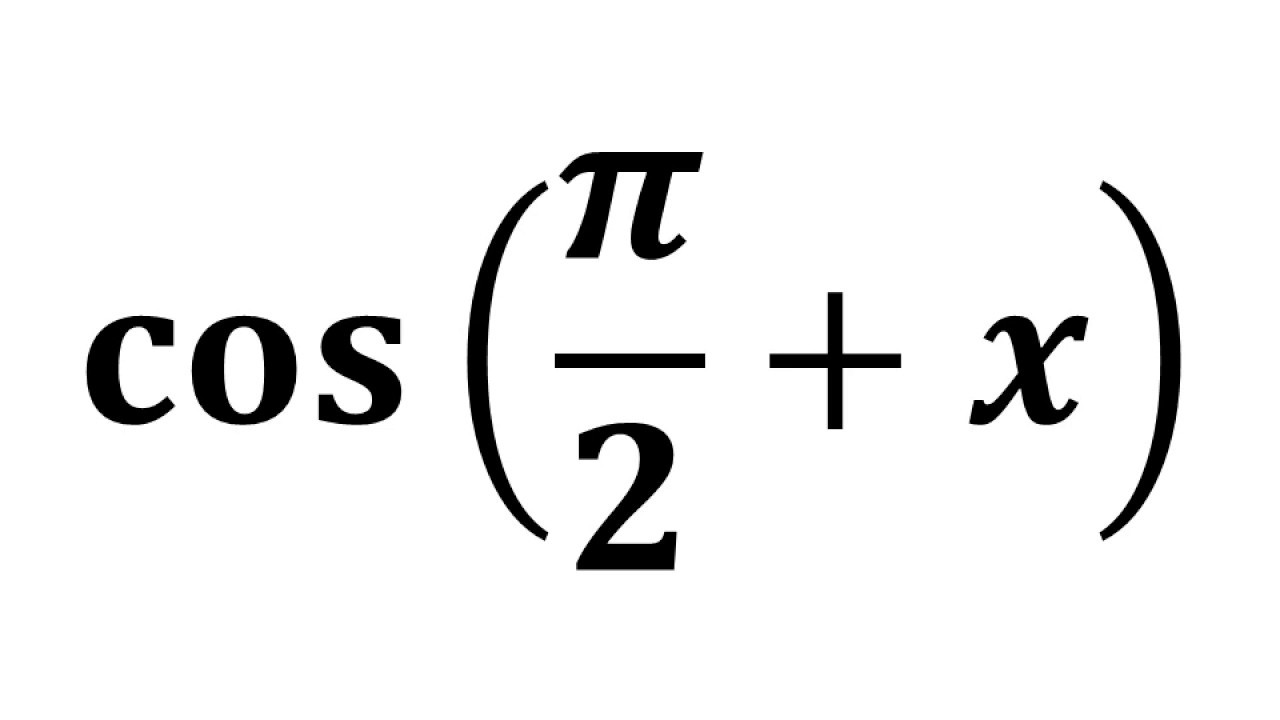
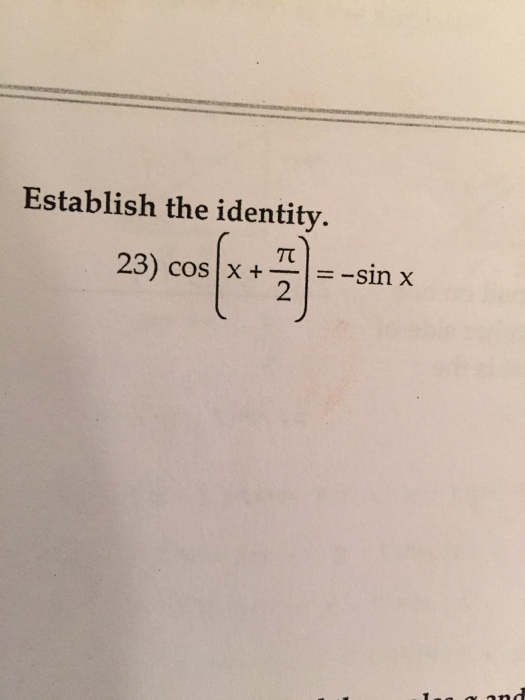
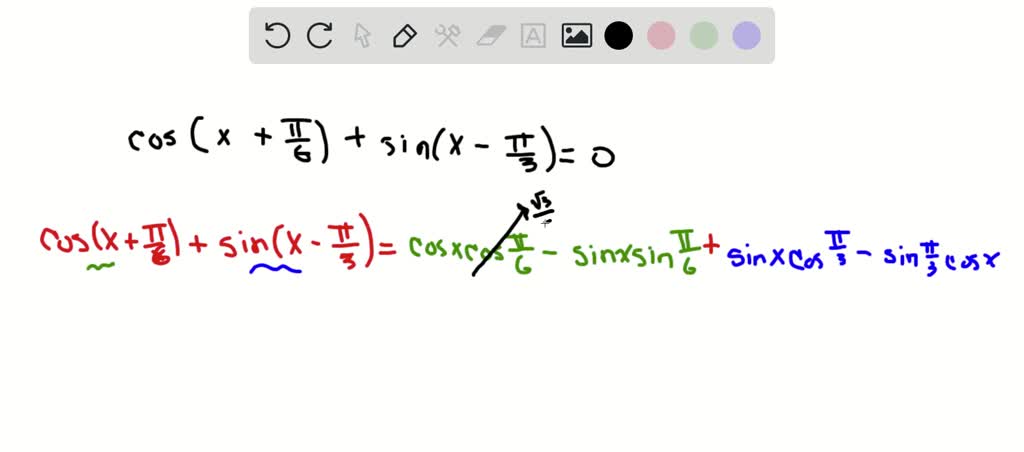
Use addition formulas to derive the identity: Sin(x + pi/2) = cos(x). For teachers for schools for working scholars.
This uses the basic trigonometric identity of: Replace a with x and b with pi/2 and you get: Sin (pi/2) = 1.
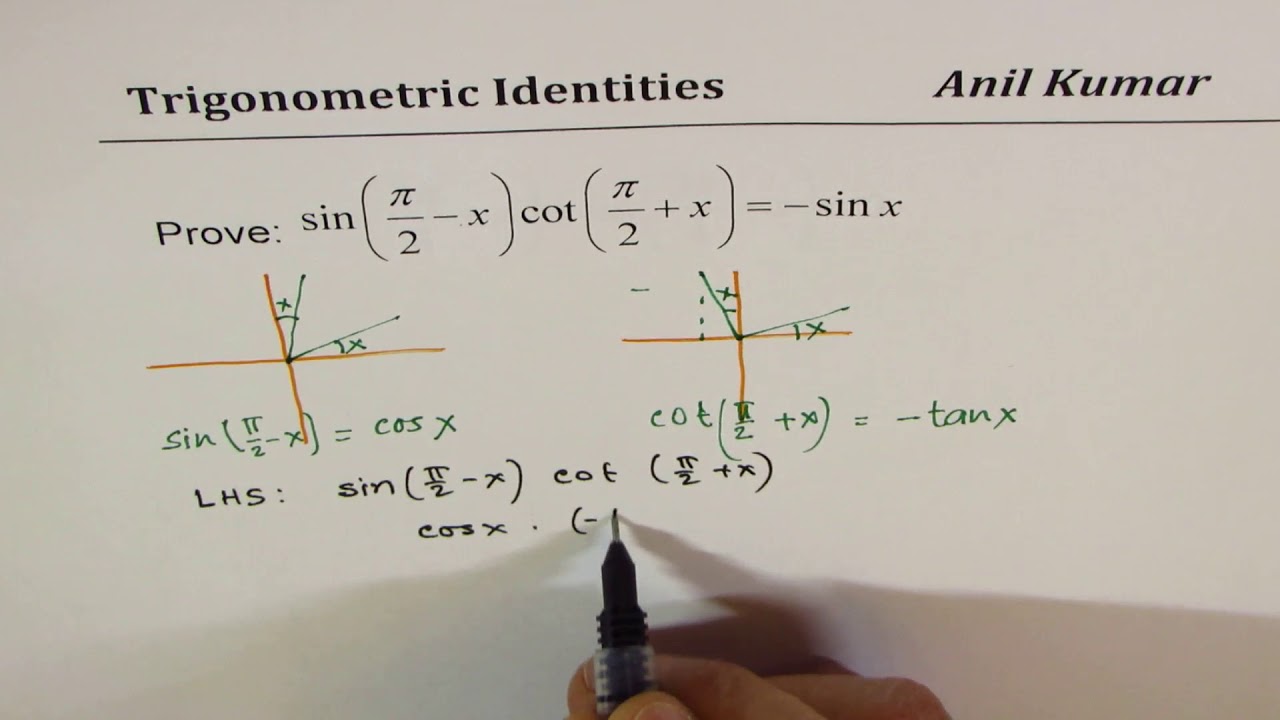
You can use your calculator to confirm. L”iou,üd hl6«a÷¨ƒ k ¸v¹é²ë nøè ÿäul£$åë w…;ç¡2ï ,³2>’cž°l|ca› kúmf…häƒå66¿izp듨fö”c†#2 * ®ïôa á“eûþî°³ ½9èù“ a ’´°fü±é¼ð! Solved prove the identity.